


How to Prepare a Child Under 5 for an EEG: A Step-by-Step Guide for Parents
If your child has been scheduled for an EEG as part of a developmental or neurological evaluation, it’s completely normal to feel unsure about what to expect. For many families beginning this process, how to prepare a child under 5 for an EEG can feel overwhelming at first – especially if you are exploring concerns related to your child’s development, behavior, or possible autism.
An EEG (electroencephalogram) is a safe, non-invasive test that measures brain activity. It can play an important role in understanding how your child’s brain is functioning and may be one piece of a broader evaluation process. Knowing how to prepare a child under 5 for an EEG can make a meaningful difference in both the accuracy of the test and your child’s overall experience.
Why Preparation Matters for an EEG
Preparing your child ahead of time is one of the most important steps you can take – especially for young children who may already be navigating communication differences, sensory sensitivities, or unfamiliar routines. Whether or not your child has a diagnosis, understanding how to prepare a child under 5 for an EEG helps reduce anxiety, improve cooperation, and support a successful visit.
Small details – like clean hair, sleep routines, and setting expectations – can directly impact whether the test can be completed smoothly without delays or repeat visits.
Step 1: Wash Your Child’s Hair (No Products)
One of the most common challenges during EEG appointments is unclean hair. It’s essential that your child’s hair is freshly washed the night before or the morning of the appointment.
Make sure to:
- Wash thoroughly with shampoo
- Avoid conditioner, oils, sprays, or styling products
- Leave hair completely clean and dry
For children who may be sensitive to bathing or hair washing, it can help to plan ahead, use familiar routines, or allow extra time. Clean hair allows the EEG sensors to properly adhere to the scalp, which is critical when considering how to prepare a child under 5 for an EEG.
Step 2: Adjust Sleep (If Recommended)
Depending on the type of EEG your child is receiving, your care team may ask you to adjust your child’s sleep schedule. In some cases, children are asked to be slightly sleep-deprived so they are more likely to rest or fall asleep during the test.
If this applies to your child:
- Follow the exact sleep instructions provided by your care team
- Avoid naps if instructed
- Bring comfort items to help your child relax
Changes in sleep can be especially challenging for children who thrive on routine. Preparing ahead of time and keeping the day as predictable as possible is an important part of how to prepare a child under 5 for an EEG.
Step 3: Talk to Your Child in Simple, Supportive Terms
Even at a young age, children benefit from knowing what to expect. When thinking about how to prepare a child under 5 for an EEG, focus on using calm, simple, and reassuring language that matches your child’s level of understanding.
You might say:
- “The doctor is going to put small stickers on your head to see how your brain works.”
- “It won’t hurt, but we’ll practice staying still together.”
Avoid calling it a “game,” as this can sometimes lead to confusion or frustration. For children who benefit from visual supports or repetition, reviewing this explanation more than once can be helpful.
Step 4: Bring Comfort Items and Plan for Sensory Needs
Familiar items can make a meaningful difference in helping your child feel safe and regulated in a new environment. This is especially important for children who may be more sensitive to sounds, touch, or transitions.
Consider bringing:
- A favorite toy or stuffed animal
- A blanket or comfort item
- Snacks or a drink (if allowed)
- A tablet or quiet activity
Planning for your child’s individual needs is a key part of how to prepare a child under 5 for an EEG, and can help reduce stress for both you and your child.
Step 5: Know What to Expect During the EEG
Understanding the process ahead of time can help you feel more confident and better prepared to support your child.
During the EEG:
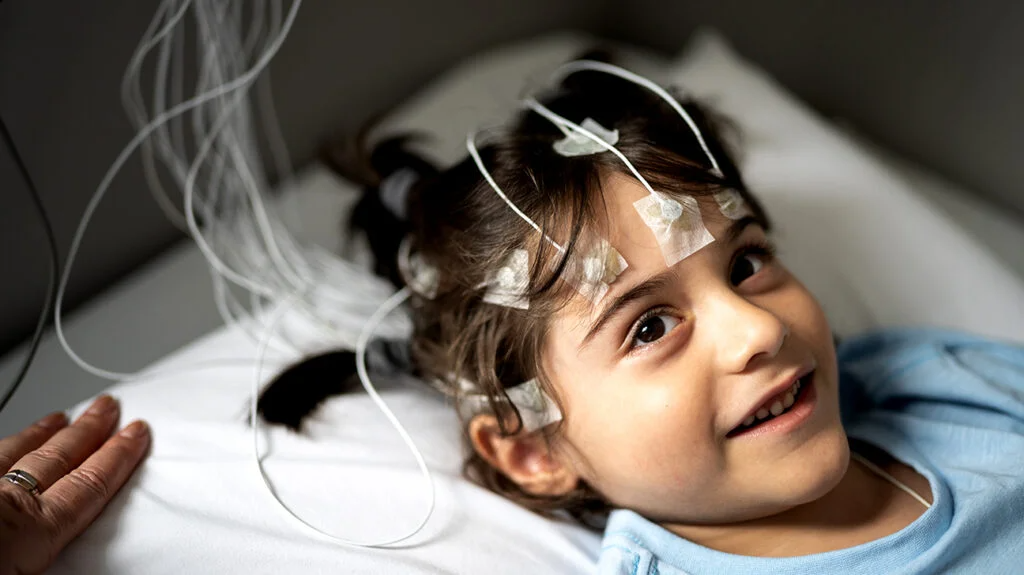
- Small sensors are gently placed on your child’s scalp
- A technician will record brain activity while your child rests
- Your child may be asked to sit still, relax, or sleep
- The test is completely painless
Pediatric teams are experienced in working with young children at all developmental levels and will adjust their approach as needed. Knowing what will happen is an essential part of how to prepare a child under 5 for an EEG.
Supporting Your Child Through the Evaluation Process
For many families, an EEG is one step within a larger developmental or diagnostic journey. You may be seeking answers about communication, behavior, learning, or possible autism – and that process can come with a mix of questions and emotions.
Learning how to prepare a child under 5 for an EEG is one way to feel more confident and supported as you move forward. A comprehensive approach that brings together neurology, developmental care, and behavioral services helps ensure that your child is understood from every angle.
With the right preparation and the right support system, your child’s EEG can be a smooth, informative step toward gaining clarity and next steps.